Vibe coding a game with Claude Code
To vibe code a game, describe it in one plain sentence, let Claude Code write and run it, and steer by playing the result instead of reading the code. This page shows one real build: a rainy-night match-three, 4.4 minutes from the sentence to a passing playtest.
Drag a piece onto its neighbour, or tap two neighbours. Arrow keys and Space work too.
Play in a full tabDownload gameNotices- 4.4 min
- from the sentence to a passing playtest
- 1%
- of a Claude Max week (estimate)
- 1 sentence
- was the whole prompt
- 200 KB
- one HTML file, no image files
Based on one Cold Chain session on Claude Max 20x (16 Nov 2026) that included other work.
1. What vibe coding a game means
You describe the game and judge it by playing it. The Hugging Face team quotes Andrej Karpathy's definition in its VibeGame write-up: fully give in to the vibes, embrace exponentials and forget the code even exists. In a game, that means the sentence is your design document and the playable build is your feedback.
Simon Willison, writing on 28 October 2026, vibe coded four games in the classic sense of the term
, with no looking at the code at all. He also notes that models could make something that looks like a game for a while, and that the hard part was getting to one that is fun to play. That is why this page spends its time on checking.
2. The sentence that started it
You name the genre, the setting, the verb and the numbers. This is the one sentence we gave Claude Code, with the kit's timing command (receipt) running. Match-three
picks the starter. Rainy night teahouse
sets the look. Swap tea things
names the verb and the pieces. 20 swaps to reach 2,000 points
sets the end of the round.
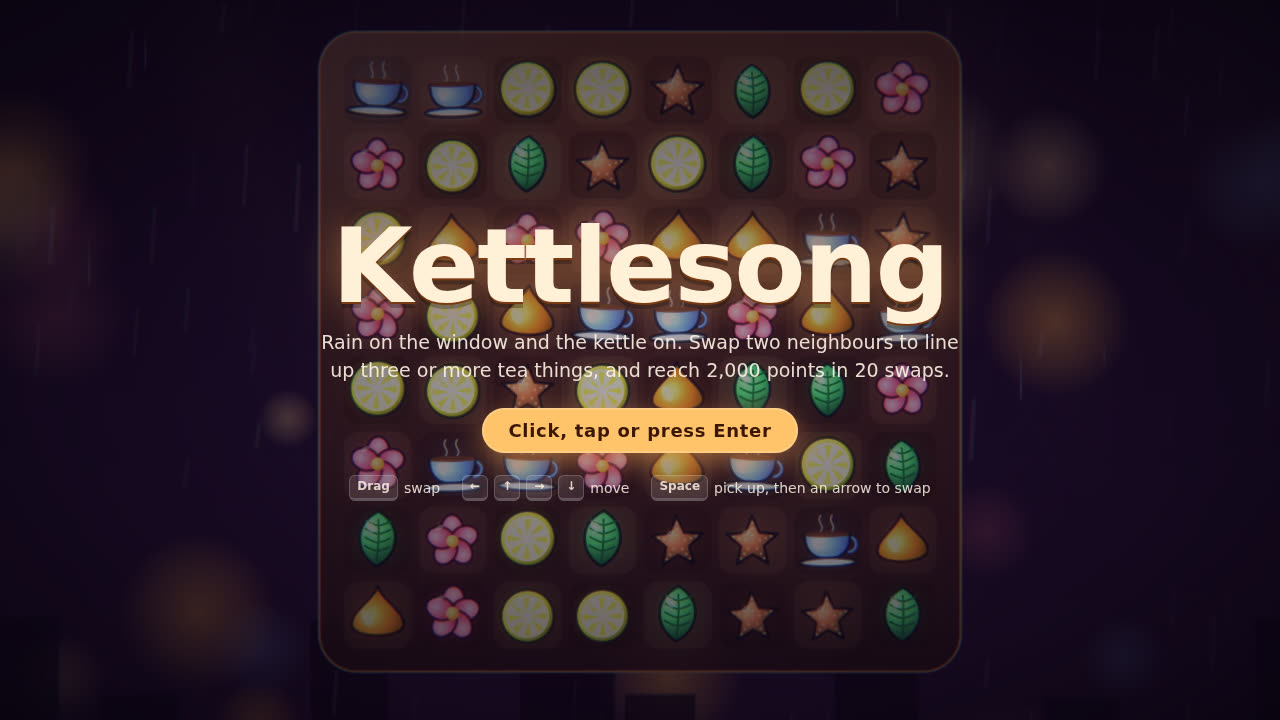
Everything else was the agent's call: six tea things, a wooden tray, a rainy window with blurred street lamps, warm colors and the words on the screens. The sentence did not need a design document, which is part of what makes this a quick way to try an idea.
Make a cosy match-three set in a rainy night teahouse where I swap tea things and have 20 swaps to reach 2,000 points.The pieces are honey, star anise, a teacup, a lemon slice, a leaf and a plum blossom. Each has its own color and shape, so a row of three reads at a glance.
3. What the agent did with it
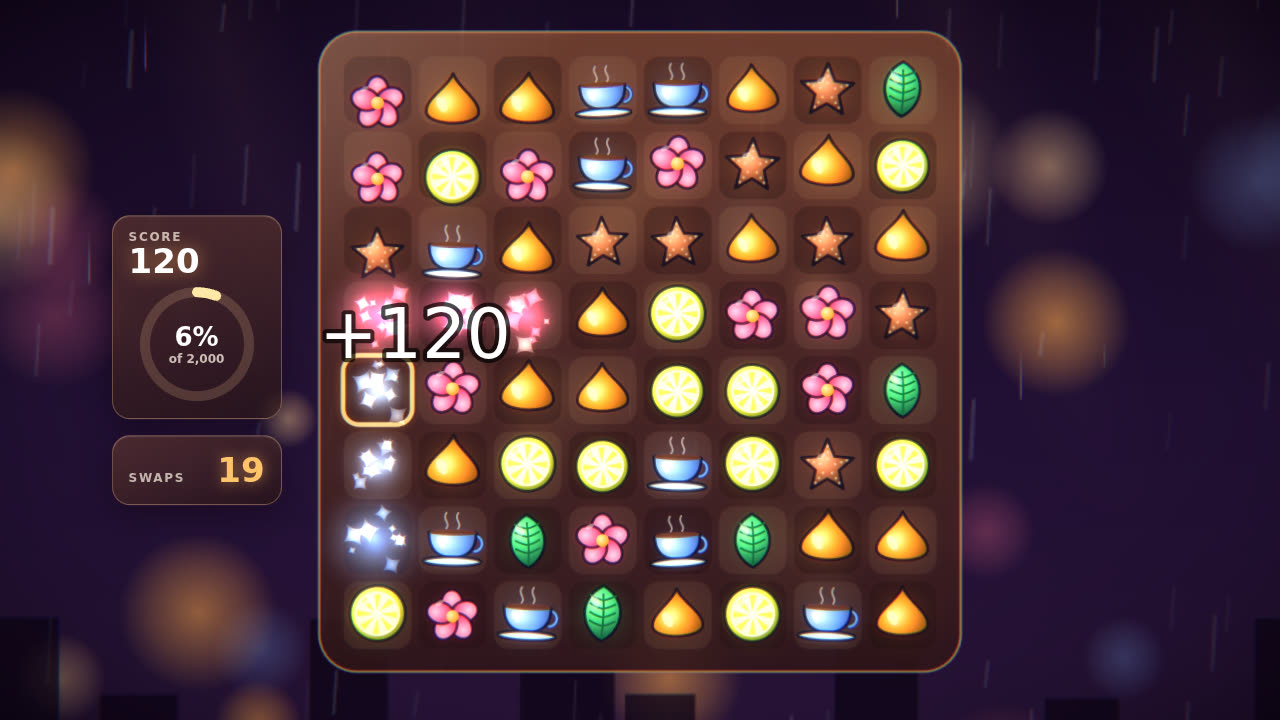
You get a game back, not a plan. Claude Code copied the kit's puzzle starter, which already has the board, swaps, cascades, the mouse and touch controls and a bot. It redrew the six pieces, repainted the tray and the backdrop, turned the rising bubbles into falling rain, set the warm theme and rewrote the title text. Then it built one HTML file and ran the playtest.
The playtest drags and clicks pieces, presses the arrow keys and Space, taps by touch and lets the bot play a round. On this build the bot reached 2,000 points in 16.8 seconds of real time. Open the run record or the full playtest report.
4. What went wrong and what caught it
You read the failing check before you ask for a fix. The first playtest passed 29 of 31 checks. Dragging a piece onto its neighbour and clicking two neighbours both failed. A probe that dragged three pieces showed the swaps working in Kettlesong and in the untouched starter, and two reruns with no edits passed 31 of 31. The agent changed no code, because the evidence pointed to timing under software rendering and not to a bug.
A vibe coder who answered that red check with fix it
could have broken working code. Rerun first, and ask for a fix only when the failure repeats. The stamps below show the clock, and the repair stamp was recorded after the reruns.
| Moment | UTC, 24 November 2026 | Minutes |
|---|---|---|
| Sentence given to Claude Code | 17:18:30 | 0.0 |
| First build opened | 17:19:22 | 0.9 |
| Repair noted | 17:22:55 | 4.4 |
| Playtest passing, captures read | 17:22:55 | 4.4 |
| Build | Genre | Minutes and cost | What was wrong, and what caught it |
|---|---|---|---|
| Kettlesong | match-three | 4.4 min, 1% of a Claude Max week | The first playtest failed two mouse checks. A probe showed the mouse swaps working in the new game and in the untouched starter, and two reruns with no edits passed 31 of 31. |
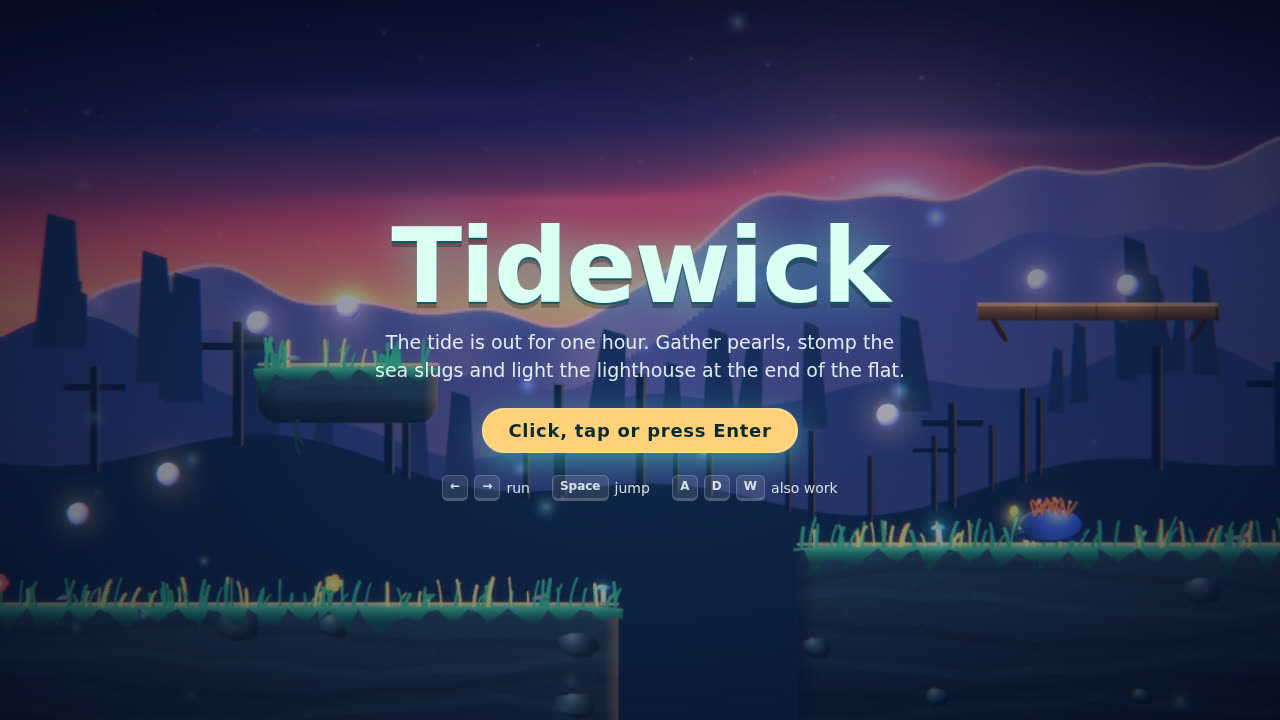
| Tidewick | platformer | 9.1 min, 1% of a Claude Max week | The first playtest failed one check: the bot lost the round. Three objects in the level were too close together, and moving them fixed it. |
| Dunewell | tower defense | 14.7 min, 1% of a Claude Max week | The playtest passed 32 of 32 and the screenshots showed stone rendering near black. The fix was a change of materials. |
The pattern across the three is that a playtest and a look catch different things. The playtest says whether the rules run and the bot can finish. A screenshot says whether the stone is black or the lemon looks like a lime. Read both, because a game can pass one and fail the other. The platformer guide and the tower defense guide show the other two builds in full.
5. How to steer by playing
You say what you saw, in one sentence at a time. A good follow-up names the thing on the screen and the change you want: the lemon looks like a lime, give it a rind and a yellow wedge
, or the star anise is hard to see on the tray, brighten it
. Kettlesong needed no follow-up like these, so both are examples of the wording to use.
Keep each follow-up to one change, and ask for the playtest after it. Willison's own follow-up was six words, Make it a LOT more fun
, and he reports that it worked, so a plain request can carry a lot. When the game works but feels flat, that is the moment to ask for more, because the agent can only improve what you point at.
6. Where a vibe coded game gets harder
You keep the game small until the first version plays. The Hugging Face write-up says people are trying to vibe code games, and that it kind of works at first, but as the project grows things begin to fall apart. A starter that already runs, a playtest and one change at a time are three ways this build stayed on the working side of that line.
Kettlesong is one screen with one rule. To try the idea on a bigger shape, the platformer and tower defense guides build a 100-tile level and an eight-wave round the same way. The starters are in the $29 a year kit on the pricing page, and Claude access is billed separately. To play games made this way, open the vibe coded games on Claude Code Games.
Questions
What is vibe coding?
Vibe coding means building software by describing it to an AI coding agent in plain language and steering by running the result, with little or no reading of the code. Andrej Karpathy's phrase for it, as the Hugging Face team quotes it, is to fully give in to the vibes and forget the code even exists.
Can you vibe code a game?
Yes, for a small game. One sentence gave Claude Code a rainy-night match-three, Kettlesong, that passed a 31-check playtest 4.4 minutes later. Bigger projects are harder: the Hugging Face team writes that vibe coding games works at first, and then things fall apart as the project grows.
What do I need to vibe code a game?
You need an AI coding agent that can write and run code, a starting point that already plays, and a way to check the result. This build used Claude Code and the kit's puzzle starter, and the kit's playtest pressed the real controls and played a full round with a bot.
How long does it take to vibe code a game?
Kettlesong took 4.4 minutes from the sentence to a passing playtest on 24 November 2026, and the requests in that window used an estimated 1% of a Claude Max week. The starter did the heavy parts, so a game from scratch takes longer.
Is vibe coding good for making games?
It is good for a first playable version and for trying ideas quickly, because you play the result right away. It is weaker where the fun depends on tuning, since the agent can make something that runs without making something good. Simon Willison reports that telling Claude to make a game a lot more fun worked.